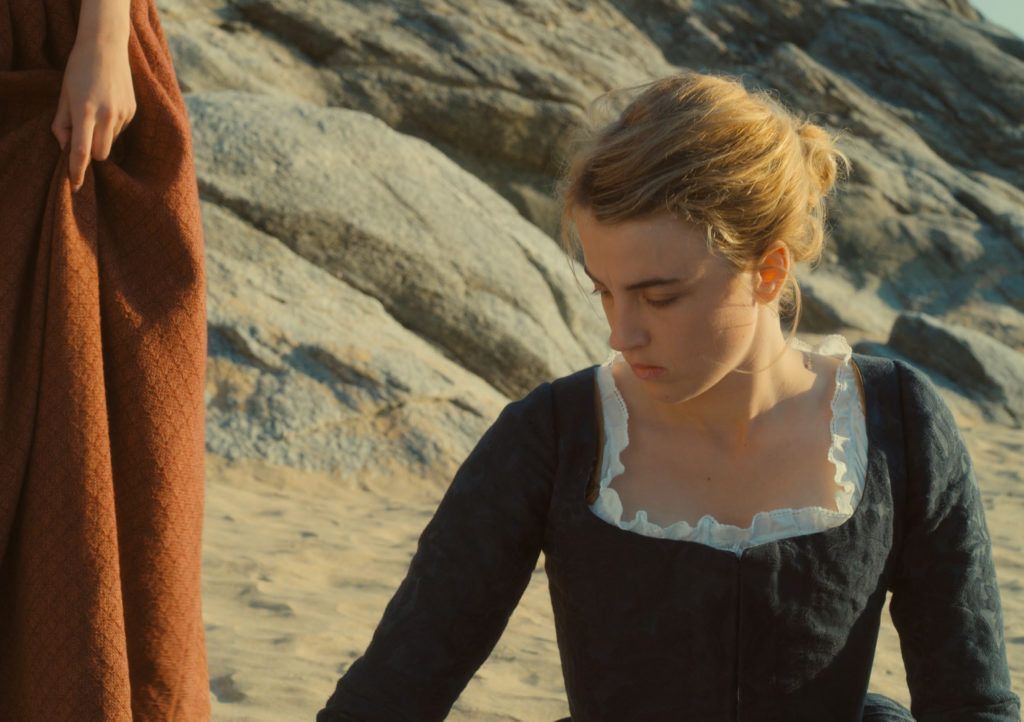
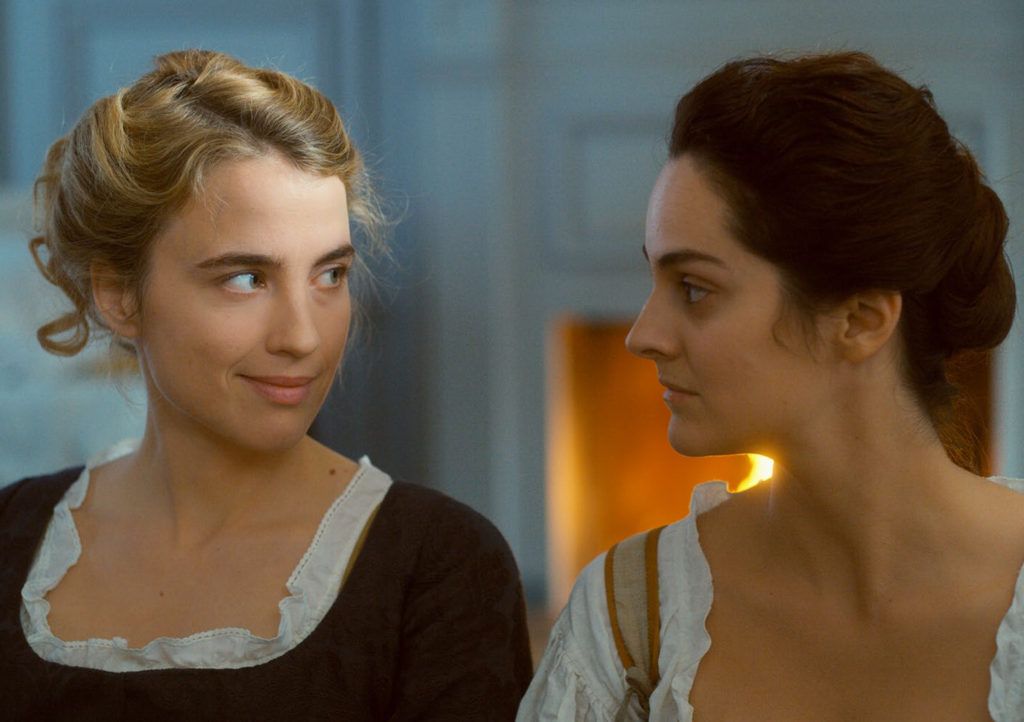
Entrevista muy interesante con la directora, también con algunas escenas que no aparecen en el trailer: https://beteve.cat/la-cartellera/estrena-de-la-setmana-retrato-de-una-mujer-en-llamas/
"I wanted to talk about that particular moment in the history of art, it's the second half of the 18th century before the French Revolution, when there were lots of female artists, hundreds of them, very strong careers, they were political, and I discovered their body of work, which was very strong and moving. So I decided to take a step in time.
The rise of desire is not only about discovering yourself, it's also about discovering the others, discovering the world. There's also more joy to it and it's a love that is fully lived, not only the object of fascination but truly embodied with also all the intellectual process of falling in love with somebody's logics, somebody's brain, somebody's humour, whereas the convention of cinema is always two people in an elevator, they're good looking and it's love at first sight. We decided to go deep into the intimacy of these women and to portray them, to share their loneliness and how unique also the interaction can be.
Even though it's set back in time when women were officially oppressed I didn't want to portray the conflict around the idea of two women being in love. I just wanted to look at a possible love, not an impossible one and not getting in this dynamic of eternal love, possession, or death, or punishment. There's no conflict like that in the film, that's all narrative convention. We're trying to make new cinema, with new dynamics. So there's also a new journey for audiences because then if there's equality, there's surprise. Everything can happen.
The movie is a love story between two characters, but it's also about friendship, friendship within the love story, and also with the other women. There's a third character that is very important, the servant, and she's not being portrayed as an accessory, she has her own desire, her own project and they share this friendship, strong sense of sorority that abolishes social hierarchy and I really wanted to portray that, to embody it, to give that sensation of sorority because it's not something that has been portrayed much, and it's such a strong feeling, powerful, important.
And that's also why I wanted to set it in the past, it wasn't to hide or wink at the present from the past or at the past from the present, because I feel that's what happened with women not been given the opportunity to be artists, we haven't been transmitted our intimacies. If there's no books, no painting, no music made by women we are not given the historicity of our bodies, our sensations, so it's basically very lonely. So for instance, portraying (aquí iría un spoiler así que no lo pongo, ¿pero alguien está leyendo todo esto siquiera?) gives us back our history in the cinema. I'm always hoping to create good memories for the audience but also memory, history, Memory with a big M. Images that have been missing, lacking, and this has a strong consequence in our lives.
One of the first paintings I saw was from a woman who was a Dutch painter. Her name is Judith Leyster, 17th century, previous to the artist that we invented. It's a self-portrait and her position is like that, she's holding the pencil and she's looking at the camera and you can actually see her teeth. I had never seen a woman portrayed like that. That's why it's so important to look back at art history and see how we've been represented. How we've been so often objectified, and try to depart from that. So the film is about the gaze, it's the plot of the film. A woman has to watch at another woman and make a portrait and then the gaze is going to be mutual. To watch at these two, to look at this character only as a subject, never an object, and that's a way to talk about the female gaze, obviously".